
USES
Every part of the maguey has a use, a name and a meaning within agave culture.
FLOWERING
-
1
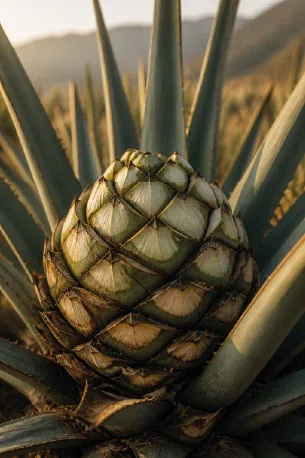
Root and rhizomes
Fibrous and abundant, it links up with thicker rhizomes that run close to the surface. When one of them catches the sun it develops a bud, and from it grows an offset: the cleaner the soil is kept around the plant, the more offsets sprout.
-
2
Flowering tip
Also known as the quiote, or flower stalk.
-
3
Crown
The base of the root.
-
4
Branches and flowers
Green and almost symmetrical in January and February; in May they bloom and turn yellow. The grower prunes the flowers to stop them fruiting, so that each axillary bud at the base develops into a maguey identical to its mother. They are cut from the quiote one by one, raised in a greenhouse until they take root and, after three years, moved to their permanent plot.
550 – 2,500 plants per quiote
Uses of the maguey or agave
Almost every part of the plant is put to use: food, drink, textiles, building, household life and ceremony. Each use, and the part of the plant it comes from.
| Use | Part of the plant used |
|---|---|
| Aguamiel (agave sap) | Maguey piña |
| Pulque | Fermented aguamiel |
| Vinegar | Fermented aguamiel |
| Aguardiente (spirit) | Distilled pulque |
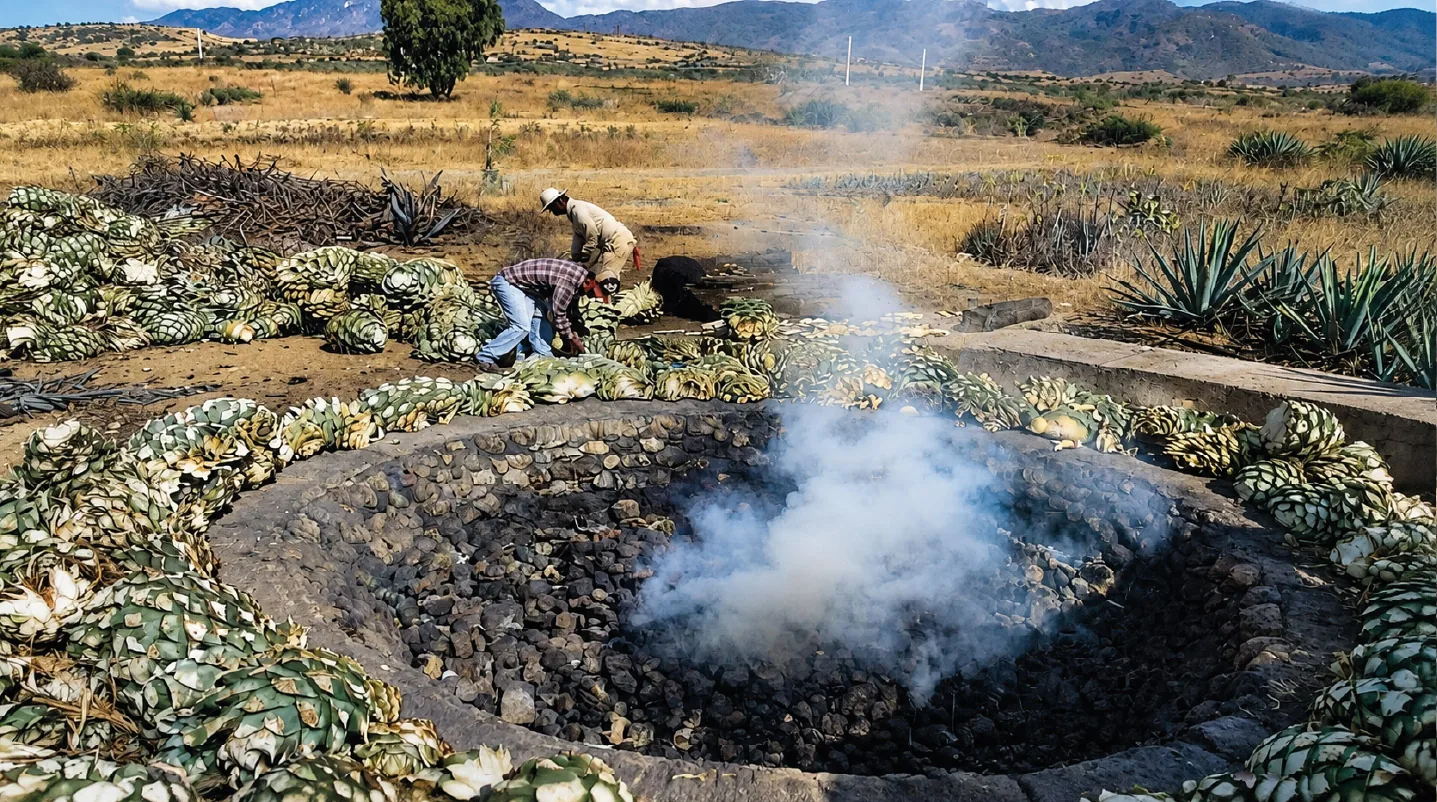
| Mezcal | Piña of mezcal agaves |
| White worms | Piña |
| Red worms (chinicuiles) | Piña |
| Worm salt | Piña |
| Wrapping for barbacoa | Leaf |
| Yeast | Pulque residue |
| Barbacoa | Green leaf |
| Thread, cord and textiles | Leaf fibres |
| Beams | Dried quiote |
| Poles and posts | Dried quiote |
| Roofing | Fresh leaves |
| Additive for mortar | Leaf sap |
| Laundry soap | Roots and leaves |
| Scrubbing brushes | Roots |
| Brushes and brooms | Roots |
| Baskets | Leaves |
| Covering lamb barbacoa | Leaves |
| Scourers and tow | Dried quiote |
| Stools | Dried quiote |
| Ritual drink | Mezcal, aguamiel and pulque |
The whole plant
The maguey is not confined to a single purpose. Roots, leaves, piña, quiote, fibres, sap and aguamiel serve the table, the palenque, the home and the rite. Mezcal is just one of those destinies: the most visible, but not the only one.